Pocket Watch Workshop
Geneva
Geneva has been the centre for ‘haute horlogerie’ for centuries. Clocks (those timepieces that included a bell) were not uncommon in the Eleventh Century. But it was Charles Cusin, a Frenchman from Burgundy, who arrived in the City in 1587 and established a very successful watchmaking business. This stimulated the growth of watchmaking in Geneva and subsequently around the world.
By the mid Nineteenth Century the Geneva trade could be categorized into two types: technical and fashion. As the industrial revolution accelerated there grew with it the need for increasingly accurate timepieces and the Genevan makers produced a bewildering array of chronometers, stop watches and time-
Geneva remained the only centre for large scale Swiss watchmaking until the Eighteenth Century.
Neuchatel
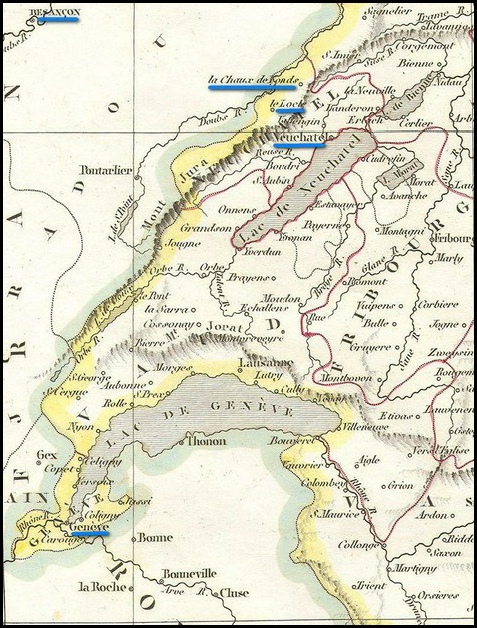
Neuchatel is a small city on the northwestern shore of Lake Neuchatel. It lies about 100 miles north northeast of Geneva on the very edge of the Jura Mountains. A few miles to the north of Neuchatel, deep into the mountains lie the towns of la Chaux de Fonds and le Locle. All are within the canton of Neuchatel.
Daniel JeanRichard is the man ever associated with bringing watchmaking to the area. Some accounts have it that a resident from le Locle who had been journeying abroad brought a broken English pocket watch to JeanRichard, a budding engineer, to see if he could fix it. Other accounts suggest it might have been JeanRichard himself who brought the watch back. Whichever account is right, there is no doubt that it was JeanRichard who, inspired by this watch, began making them for himself in 1681.
The Jura Mountains are fairly inhospitable and inhabitants were used to scraping together a living during the summers, hoping that they had earned enough to see them through the winters. Theirs was a hard and precarious life. Until, that is, JeanRichard began his career as a watchmaker. He earned a better and less precarious living. Those in the neighbourhood thought so too and followed suit. It was not all plain sailing though. Watchmaking tools were expensive to procure, so they ended up making their own. Some a hundred years later the area was supplying superior and often unique tools to watchmakers around the world. This business almost matched that of watchmaking itself.
Other good things cam out of the Neuchatel area as well; namely some of the most renowned watchmakers; Ferdinand Berthoud (1727-
Watchmaking was organised very much on a piece basis. Families would spend the Winter, which could last 6 or 7 months, making hundreds (or even thousands) of just one or two components which would be bought up by merchants to sell on to the finishing houses. There were lots of sellers and lots of buyers, so this sort of competition encouraged consistency of product and fair prices.
It is often claimed that le Locle is the birthplace of Swiss watchmaking, but I believe it is better called the birthplace of mass watch manufacturing. By 1850 the Neuchatel region was churning out 120,000 watches a year (35,000 in gold cases, the remainder silver). This was some four times the output of Geneva and about the same as England! And these were produced largely by hand. It wasn’t until later on in the century that watchmaking machinery was developed and installed. Most of the production was exported to the United States; hardly any to England (although steel for the watch parts came from here).
John Bennett, responding to the toast of ‘Prosperity to the Horological Institute’ at the BHI annual dinner in 1863, was keen to underline the ‘threat’ from Swiss watchmakers. The English watch (typically a fusee lever) had a large niche of the world market; it was well made, robust, repairable and accurate. You paid for this, of course, but the English industry could see no reason why there would not always be a demand for such a watch. Bennett pointed out that production (numbers of assayed cases) had fallen from a high of 187,000 in 1855 to fewer than 120,000 five years later (he may have massaged the figures to suit his speech). No one could explain this reduction. He claimed that in 1855 1,500,000 had been made in Neuchatel and that he “saw twenty thousand women employed in the trade at their own homes”. He also suggested that “one of the secrets of the success of our foreign rivals was the fact that throughout the whole of the watchmaking districts, they have not only in every great town, but in every little village, a Horological Institute.”. By way of comparison the BHI was founded 5 years before to encourage cooperation and disseminate knowledge and ultimately to provide the catalyst that would save the English watchmaking industry, but Bennet was dismayed that by 1863 there were still only 300 members! He went on to say that watchmaking in the Jura mountains was a way of life for every inhabitant. Even the children went to watchmaking schools; it was compulsory and free.
John Jones rose to speak next and reflected the attitude of the English industry when he found a weak rejoinder for each of John Bennett’s points and ignored what seemed so evident, burying his head in the sand.
Le Locle and la Chaux de Fonds are sister cities and as such were awarded World Heritage status in 2009. Clerkenwell has largely been forgotten!
The French Revolution
Until the start of the Nineteenth Century the Swiss, like the rest of the watchmaking world, were using the verge movement, but there was revolution in the air. In about 1764 Jean-
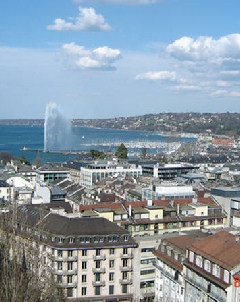
Geneva -
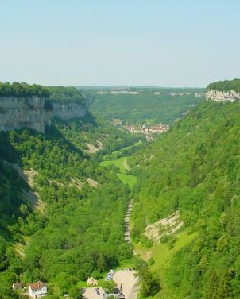
The Jura Mountains provided scant living 300 years ago
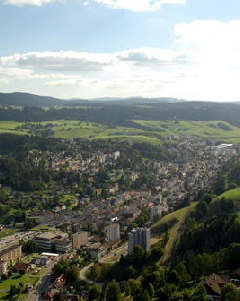
Le Locle and her sister city la Chaux de Fonds nestle high in the Juras. Millions of affordable watches were made here. In 2009 it became a World Heritage site
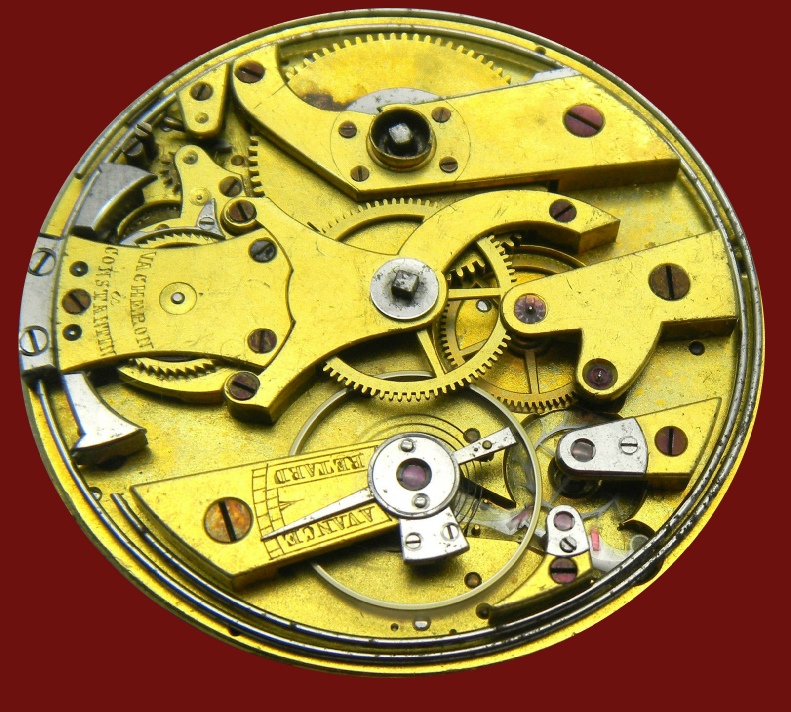
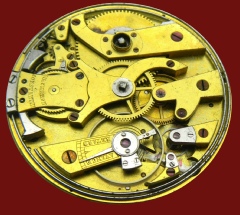
Here’s a quarter repeating movement. Gongs running around the outside are struck by the hammers on the left
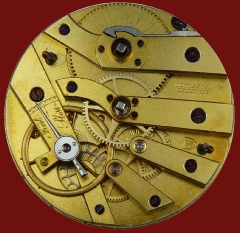
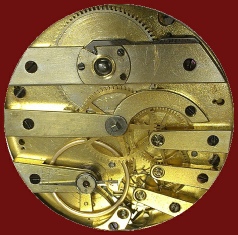
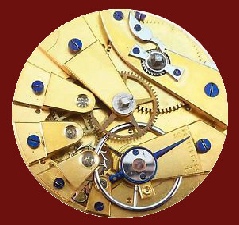
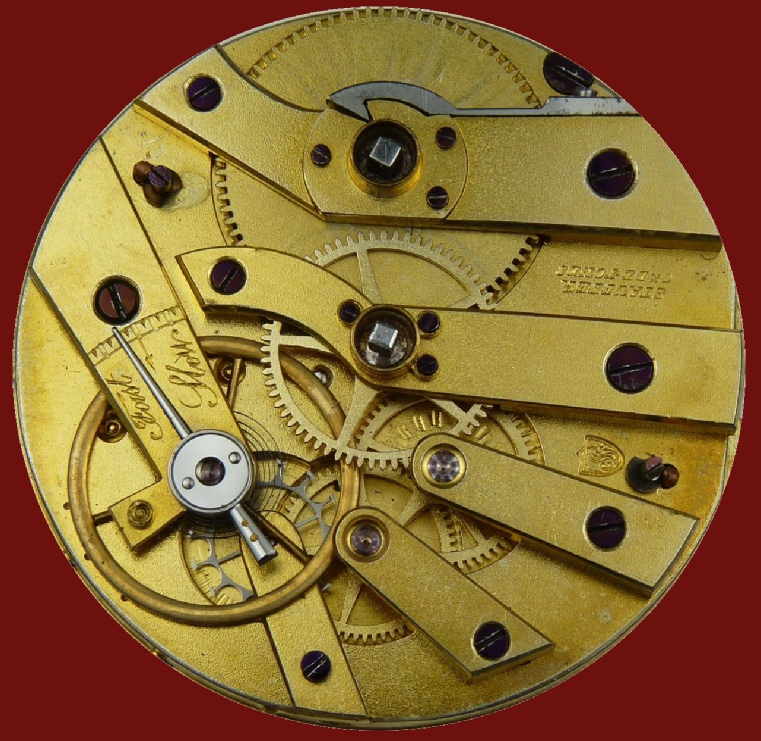
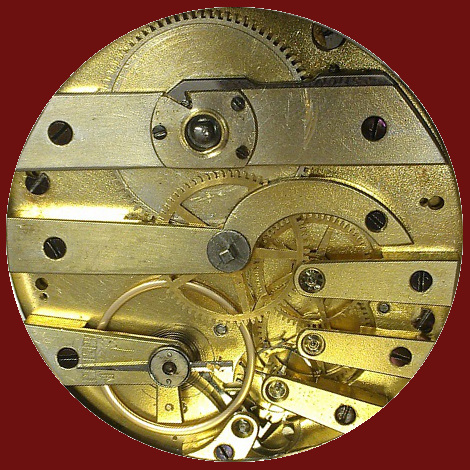
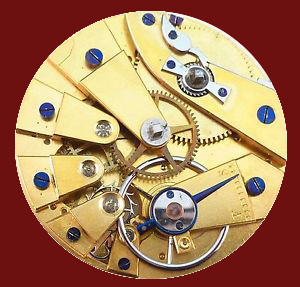
Many of the mass produced Swiss watches had very similar movements based on the Lepine configuration. This is the Lepine Caliber III and was used between roughly 1830 and 1840. It is more usual to find them with a cylinder escapement, but this has a lever with a club foot escape wheel.
Here is the Caliber IV. Created in 1835, it was in use until about 1850. This one has the more familiar cylinder escapement.
Caliber V, where the mainspring bridge is straight, was used until the later Nineteenth Century. This has a lever escapement.