Pocket Watch Workshop
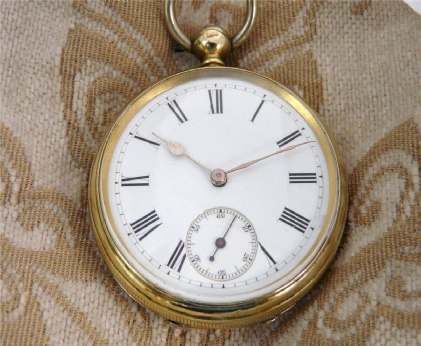
English makers made the best watches in the world
Watches became a possibility when the technology to make a small, homogenous mainspring became available. Timepieces began to be worn in the 16th Century and ‘pocket’ watches were born apparently when Charles II popularised the wearing of waistcoats.
The introduction of the fusee (to even out the torque of the mainspring as it wound down) and the widespread use of a balance spring after its invention in 1657 meant that the mechanism became accurate enough to add a minute hand.
Huge leaps forward were made during the next hundred and fifty years by some of watchmaking’s greatest inventors: Englishmen Thomas Tompion, George Graham, Thomas Earnshaw, John Arnold, Thomas Mudge, Josiah Emery, Edward Massey and Peter Litherland and Frenchmen Julien and Pierre le Roy and Jean-
The pocket watch of 1800 looked very much like today’s.
The English watchmaking industry at this time led the world in quality and quantity. We were making in the region of 175,000 watches a year, many being exported to the States and around the world. This was hardly mass production, but then there wasn’t much demand for watches at this time; they were relatively expensive. A basic Losada silver watch in 1837 cost £4 or roughly £400 in today’s money.
In many ways the first half of the Nineteenth century was a golden period for English watchmaking; there was a huge confidence and this led to a period of continuous innovation providing, if not the breath-
There were verges, rack levers, detached levers, duplex, chronometers, full plate, half plate and three quarter plate movements, plain balances and cut bi-
From about 1850 there was increasing pressure on the English watchmakers from watchmakers in Switzerland and the USA. The Swiss were perfecting the art of large scale production and the Americans introduced factories which produced watches mechanically. And as the century concluded both were adding quality to quantity.
The English industry carried on much as it had done over a hundred years before. Its centre was in Clerkenwell (London) and the vast majority of its trade and activity was carried out here, but basic movements were made in Prescot (near Liverpool) and latterly Coventry and these were ‘finished’ in Liverpool, Coventry or Clerkenwell. Retailers around the country would order from these three centres and, more often than not, would have their own names engraved on the barrel plate. Most of the ‘watchmakers’ in the country were repairers (and very skilled they were too) who worked from retail premises selling their own brand watches and often other brands as well, as well as jewellery, silverware and the such.
In 1860 the tariff on imported watches was removed thus opening up the UK to cheaper imports at exactly the time when more and more were being produced!
Many English watchmakers had seen the coming ‘perfect storm’, but no concerted, cooperative effort was made soon enough or large enough to save the industry. The British Horological Institute, founded in 1858, was one such initiative but by 1900 the English watchmaking industry was all but dead.