Salamanca, N.Y.
Pocket Watch Workshop
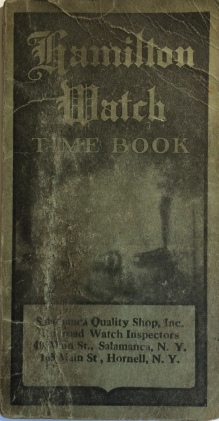
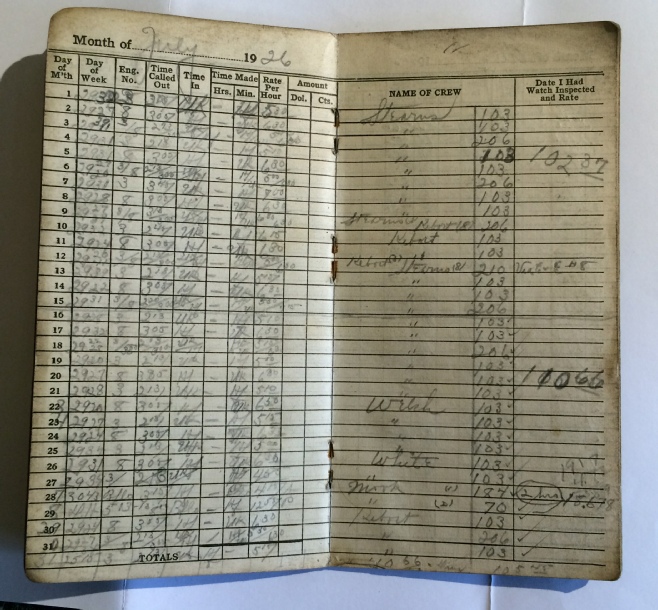
I don’t suppose Salamanca has ever been associated with pocket watches before, but uncovering this Hamilton Watch ‘Time Book’ (top right) made me begin to realise just how integral watches were to the railroads.
The book was an eBay purchase (of course!). I didn’t know what it was or how it was used, but I was very keen to find out.
It was printed for Hamilton and designed to be used by railwaymen (presumably foremen) to keep a record of working hours and earnings. There is also a final column for keeping tabs on watch inspections and rates. There’s line for each day of the month and enough pages for a whole year. This example has been completed for the year 1926.
Hamilton (I’m guessing) distributed these every year to watch shops throughout the country, preprinted with the details of the retailer on the front cover; in this case the “Salamanca Quality Shop, Inc. Railroad Watch Inspectors” with outlets at 40 Main St, Salamanca, N.Y. and 165 Main St, Hornell, N.Y.
The record pages were prefixed and suffixed with Hamilton’s advertising blurb and ‘useful’ information on how to look after your watch, weights & measures, help in case of accidents and antidotes for poisons.
So it’s a piece of advertising for Hamilton and their retailers and a useful record book for railroadmen.
If you enlarge the photo to the right for July 1926 you’ll get a good feel for its purpose. Unfortunately I haven’t worked out what each column has been used for. I think the first records the engine number and after a bit of searching I found a photograph of one of the engines listed on later pages; the 3201. I also found a picture of 2929 which could easily have been a sister to some of the engines noted on this page
Name of Crew has been used for its intended purpose. ‘C Byham’ appears earlier and, according to records, was an Engineer from Meadville PA who died in 1928 aged 56. ‘Hickernell’ was another engineer from Meadville and retired, aged 65, in 1946 after 41 years’ service; he died six years later.
And the last column, which should have been used to record watch inspection dates and rates, looks as though it records fortnightly total pay.
The ‘Time Book’ started to come to life!
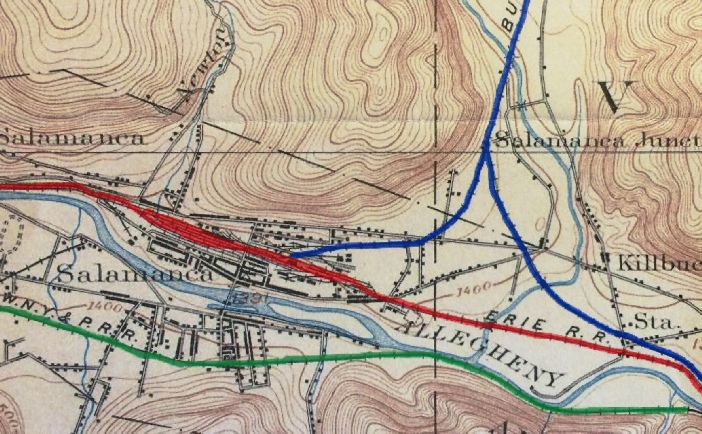
And what of Salamanca? Well, it’s on the Allegheny River at the northern tip of the Allegheny National Forest and to the south of Buffalo and Niagara Falls. In 1860 its only inhabitants were Seneca Indians, but when the Atlantic and Great Western Railway joined the Erie Railroad in 1863, the three small, wooden freight barns that were built at the junction became the foundation for a railroad boom town.
In a matter of only a few years it became a bustling town and by the time the Buffalo, Rochester & Pittsburgh Railway and the Pennsylvania Railroad added connections, the bustling town developed into a major city and could boast of two roundhouses and a large yard. The city probably reached its zenith in the 1940s by which time generations had worked on the railroads.
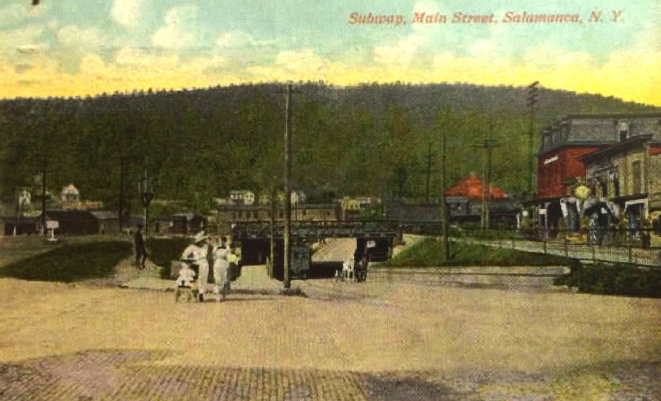
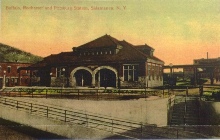
Today, the city is a shadow of its former self; scrub growing where there used to be track, yards, stations, repair shops, freight buildings and homes. The BR&P station has been restored and operates as the Salamanca Rail Museum. Opposite what looks like the Town Hall there is an old, low, red brick building with a shop frontage. To one side a vacant lot. To the other, a green track where a railroad used to run along the bank of the Allegheny River. Google Street View shows it as 40 Main Street. I wonder if this was the ‘Salamanca Quality Shop, Inc. Railroad Watch Inspectors’?
A piece of advertising.
Now a piece of social history.
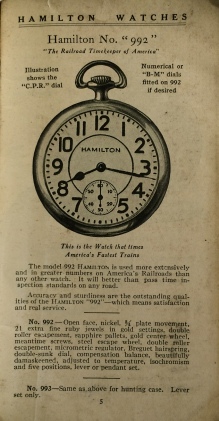
The Hamilton 992 was (and still is) considered to be one of the finest Railroad Watches.
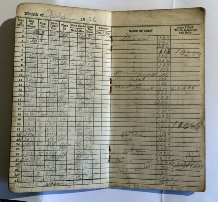
Not quite fully used as intended. There doesn’t appear to be any record of watch inspections!
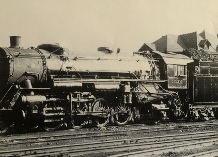
The 3201 appears in the book.
Salamanca was served by and served three major railroads.
Salamanca lies on the Allegheny River in north New York state.