David Hare
Pocket Watch Workshop
Heroes & Villains
Alexander Hare was a much respected London watchmaker (clockmaker and merchant) during the latter half of the eighteenth century. A contemporary of Benjamin Vulliamy, James Vigne, William Frodsham and John Dwerrihouse he lived, worked and died at 17 Greville Street, just around the corner from Hatton Garden.
He and his wife, Janet, had both come down from Scotland and lived in the area for over 50 years. Pillars of the community, they had four children (or at least four who survived into adulthood); in order of appearance these were Alexander, David, John and Joseph.
I came across David’s name because I also have a long-
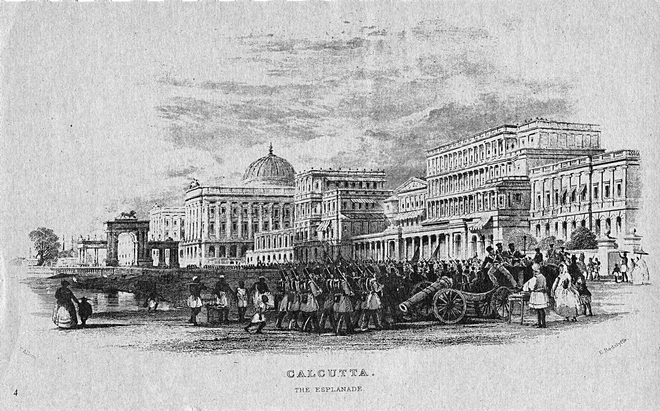
I researched David Hare and found an extraordinary human being. He was baptised in 1777, so it is possible he was born in the same year (although some accounts suggest it was in 1775). He arrived in Calcutta around 1800 and set up in business. Contemporary sources list him as a watchmaker but I would guess that he was importing watches and clocks (and probably jewellery as well) from London in association with his father or at least through his father’s connections because by 1815 he was apparently running a very successful and highly lucrative business.
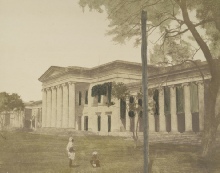
By this time he was also deeply immersed in trying to improve the education and welfare of Hindu children in Calcutta. He was a prime mover in the establishment of the Hindu College in 1816 (donating a parcel of land for a building). He helped administer and fund the School Society’s School and what became the Hare School opposite the Hindu College. He also helped establish the Medical College. In the words of a contemporary eulogy “Mr Hare was interested in all educational establishment instituted for the amelioration of the native mind and was always forward to render them such support as he could”. But he also involved himself in improving the lot of the native citizen; campaigning for trial by jury in civil cases and the emancipation of the press. Indeed, “he was connected with almost all the societies of Calcutta, and did all that he could to further their interests.”
As he became more and more involved in the welfare of the local community he sold his business to a friend, Mr Grey, in 1820 and devoted the rest of his life and his wealth to his good works. He died of cholera on 1st June 1842 and on a wet day soon afterwards a trail of mourning carriages and around 5,000 sorrowful Hindus followed the hearse to his last resting place.
The Hare School is still thriving as is the Hindu College. Look them up on the web!
You can read a lot more about David Hare in A Biographical Sketch of David Hare by Peary Chand Mittra published in 1877.
And now we turn to his older brother, Alexander. The contrast could not be more stark!
Alexander was one of those British adventurers who would do almost anything to enrich himself. From our perspective of 200 years later such adventurers have become either heroes or villains. But the truth is heroes could be villains and vice versa and Alexander Hare was a bit of both.
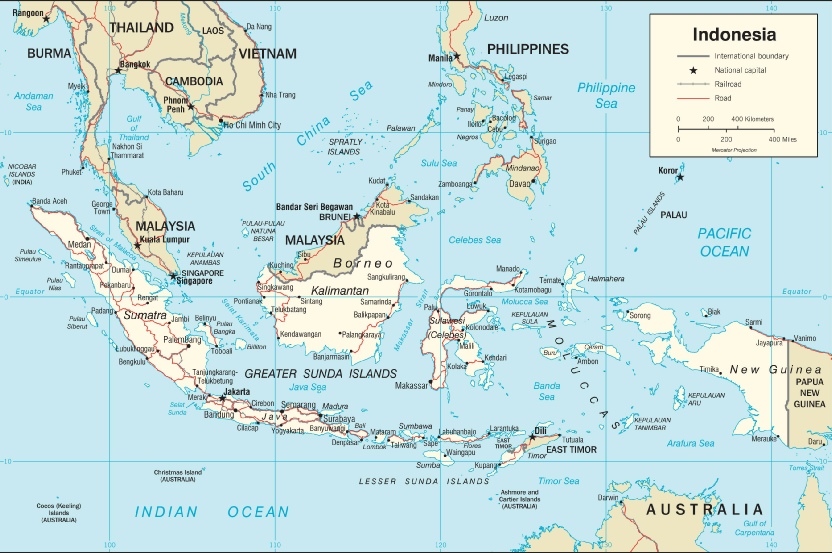
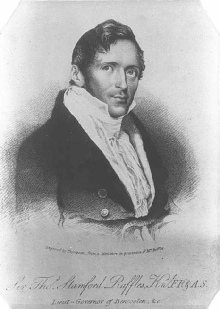
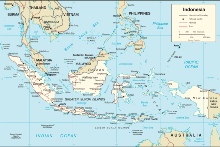
He was a trader, a diplomat (appointed Commissioner for Borneo by his one-
But having upset Dutch and British officialdom (East India Company) and in an attempt to avoid their reach, in 1826 he and his harem (considered slaves at the time) established a colony on the Cocos Islands with John Clunies-
A very detailed account of Alexander’s adventures is given by F. Andrew Smith of The University of Adelaide in Borneo’s first “White Rajah”: new light on Alexander Hare, his family and associates.
Who said watchmakers lead a boring life?
Hindu College
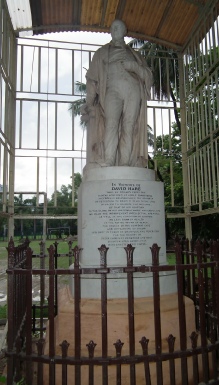
Statue erected to David Hare by public subscription
Indonesia today
Stamford Raffles
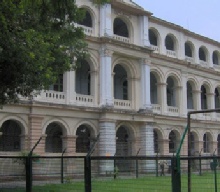
Hare School