The Dog Smugglers
Pocket Watch Workshop

I discovered this story in an 1842 copy of The Saturday Magazine. I still find it hard to believe, but between 1820 and 1830 40,000 French dogs perished as a result of the watch trade.
In 1842 the French Government was levying a reasonable 10% tax on imports of silver goods and 6% on those made of gold. Before this, however, the rates were very much higher, so small, portable, valuable items like watches became a very ‘smuggleable’ commodity; criminals would sew up to 150 watches into their waistcoats and saunter across the border to earn themselves a good, but precarious living.
As the French customs officers cottoned on to this ruse and shot many a would-
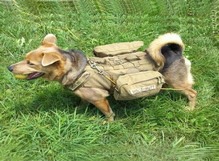
The poor dogs were kennelled in France, two or three leagues (6 to 10 miles) from the border. They were trained to carry weights and to work in packs. When on a mission they would be taken across the Belgian border where they would be starved and beaten until they were ‘keen’ to return to their kennels. Their keenness suitably sharpened, they would be loaded up and released to return to the warmth and plenty of their ‘maisons de chien’ back across the border in France.
The system worked so well for the smugglers that the French Government introduced a bounty of 3 Francs for each dog caught and destroyed. Official records report that up to one in ten dogs were caught, but it seems likely that the real figure was much less than one in twenty. What is not in doubt is that this bounty cost the Government eleven thousand Francs a year prior to 1827 and fifteen thousand a year for some years afterwards; in total some 120,000 Francs (about £5,000). And did very little to dent this profitable trade. The French authorities looked for ways to stem the flow, some too severe to implement and settled on, among other measures, doggie passports! To very little avail. In the end, import duties were reduced and smuggling became largely unviable.
At this same period the British Government was levying a duty of 25%, which encouraged an even more vibrant smuggling industry, but fortunately our island status precluded the use of even the strongest canine swimmers.
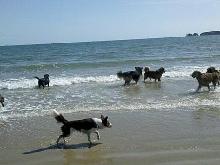
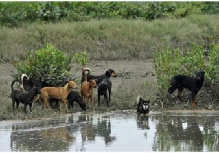
Packs of dogs can be a formidable force . . . . for good and bad.
Thanks to the Channel, Britain was safe from even the strongest of swimming canine smugglers.
For even the smallest dogs.
No dogs have been harmed in the production of this article! Sox (above) is my eight week old JackChi
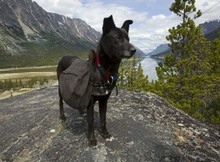
Dogs have been used as (small) pack animals through the ages. You can buy backpacks for them today!