Abbott, Abbott’s American Watchmaker and Jeweler
Abbott, Watch Factories of America
Abbott, Watchmaker’s and Jeweler’s Practical Hand Book
Anon, Watchmakers’ and Jewelers’ Practical Receipt Book
BHI, Horological Journal
Booth, Clock and Watchmakers’ Manual
Camm, Watches Adjustment and Repair
Denison, Treatise on Clock and Watch Making
Fried, Understanding the Verge Fusee Watch
Garrard, Watch Repairing
Gazeley, Clock and Watch Escapements
Glasgow, Watch and Clock Making
Goodrich, Watchmakers’ Lathe
Grafton, Horology; a Popular Sketch
Grossmann, Detached Lever Escapement
Hasluck, Watch Jobber’s Handybook
Hood, Modern Methods in Horology
Kemp, Fusee Lever Watch
NAWCC, Watch & Clock Bulletin
Nelthropp, A Treatise on Watch-
Reid, Treatise on Clock and Watch Making
Stelle, American Watchmaker and Jeweler
Saunier, Watchmakers’ Hand-
Sweazey, Chicago School of Watchmaking, Master Watchmaking
Waltham, Watchmakers’ Handbook
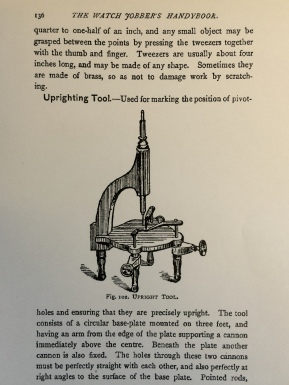
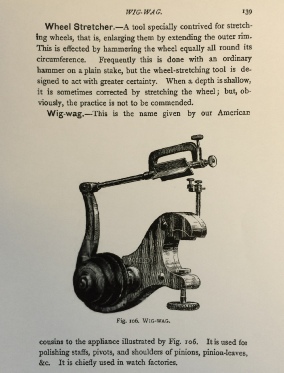
The Watch Jobber’s Handybook
Pocket Watch Workshop
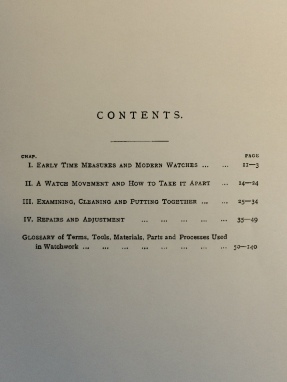
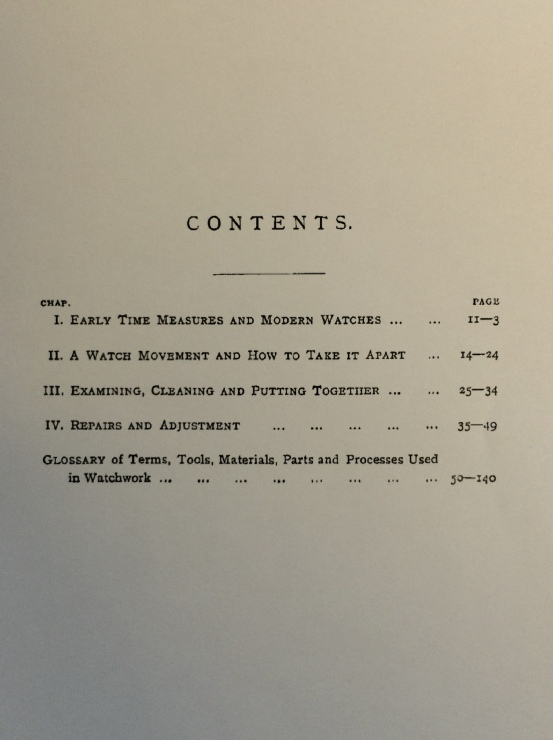
One of the few English books, although Paul N Hasluck was an Australian! The book is split into four chapters: I -
The interesting thing is that the detail, the tips, advice and techniques all apply to the verge. The verge was well out of date by 1889, but there were still plenty around and it was considered a much easier watch to learn on than the smaller fuse lever. The terminology is in English as well.
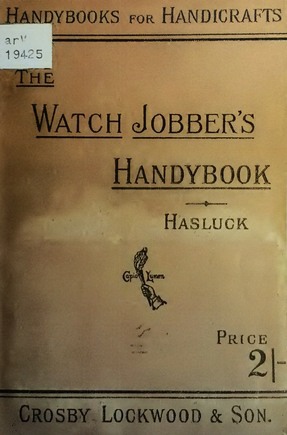
A useful book if you don’t know where to start with a verge movement.
Hasluck, 1889